The client faced high losses due to frequent breakdowns and uncontrolled deviations in the wire drawing process. The lack of timely anomaly detection led to frequent production outages, higher maintenance costs, and material waste. Traditional monitoring methods were unable to identify problems early or provide predictive insights, threatening production continuity and the ability to meet delivery deadlines. It was therefore crucial to deploy an effective system that could ensure early fault detection, minimize downtime, and increase overall production efficiency.
AI monitoring of wire drawing to reduce production downtime
Client NameESAB CZ
Client CountryCzech Republic
- Client typeEnterprise
- IndustryManufacturing
- Application areasManufacturing & Production
- AI technologiesEdge AI / Embedded Systems, Machine Learning, Reinforcement Learning
- Business impactsEmployee Enablement & Productivity, Operational Efficiency & Cost Savings
- Data typesAudio Data, Sensor / IoT Data, Video Data
- Delivery modelsCustom Development, Product / Licensed Software, Service / Subscription
- DeploymentsHybrid
- Key capabilitiesAutonomous Control & Robotics, Predictive Analytics & Forecasting
- Project stagesInitial Production Deployment
- Solution formsAnalysis, Recommendation, or Report, Automated Backend Process, Conversational Interface, Integrated Edge / On-device Solution, Plugin / Extension for an existing system, Web Portal / Dashboard
Solution Description
Problem description
Solution
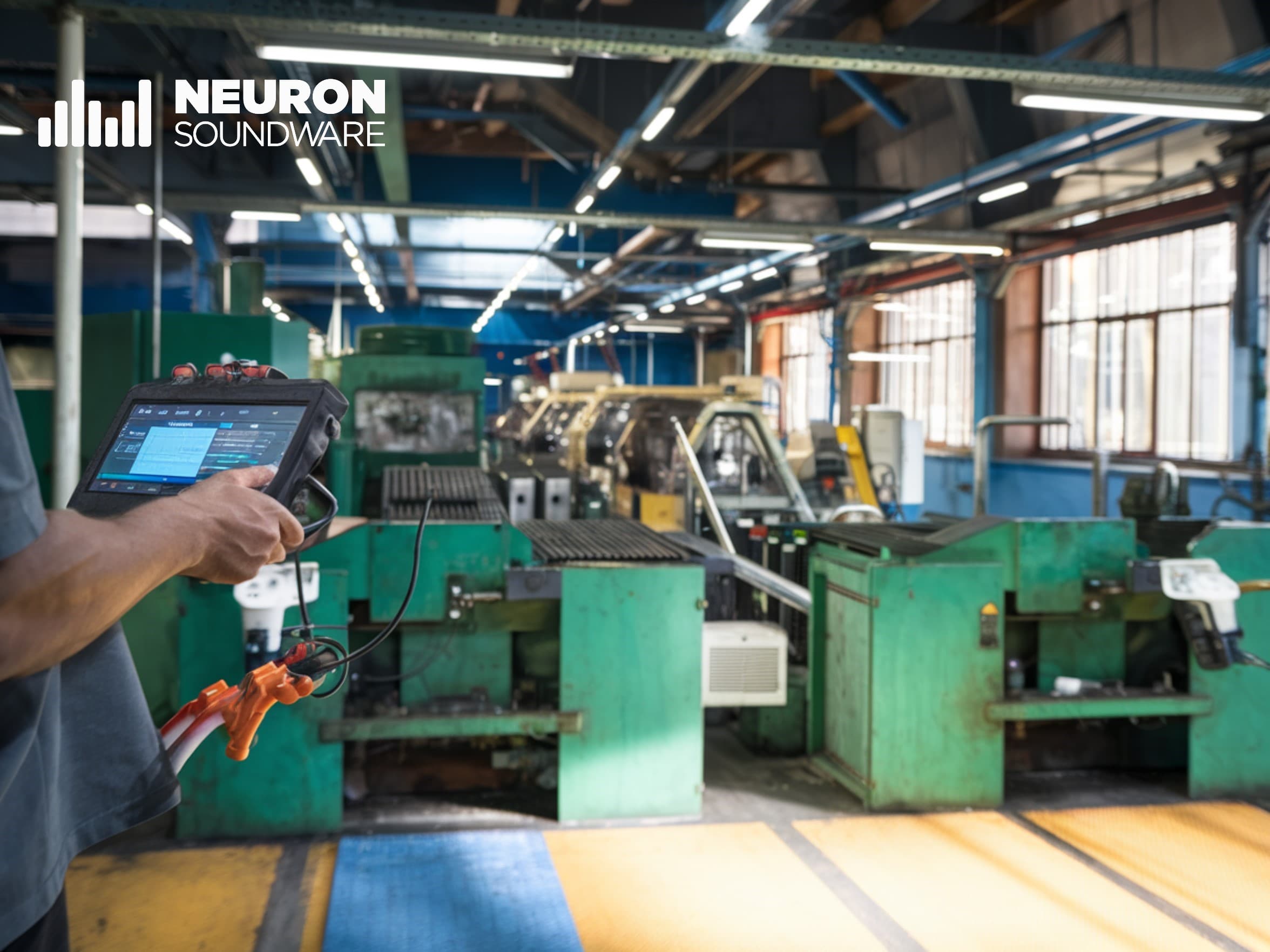
An AI system was developed to monitor the wire drawing process in real time. The solution uses machine learning to analyze sensor data and identify deviations from normal behavior. It automatically detects emerging anomalies, predicts possible failures, and alerts operators to risks before production breakdowns occur. The system is fully integrated into the production line, providing clear visualizations and maintenance recommendations. Thanks to a high degree of automation, it significantly reduces the need for manual inspection, supports predictive maintenance, and brings greater stability and efficiency to the entire production process.
Main Users of the Solution
production operators
Project timeframe (months)
6
Technologies used
Python, TensorFlow, PyTorch, scikit-learn, MQTT, OPC UA, SQL database, Docker, Grafana
Additional services
- Audit / feasibility study
- Data collection and pre-processing
- AI model selection and customisation
- Providing MLOps infrastructure
- Ongoing maintenance and retraining of the model
Implementation
Project Owner on the Client's Side
Head of functional/operational unit
Participation on the Client's Side
- Business / Product Owner
- Domain / process experts
- Software & Data Engineering / IT Ops
- Project and change management
- End users
Form of Supplier Involvement
Full implementation
Operation and Maintenance
Operational Model
Joint management between client team and vendor.
Needed Competencies on the Client's Side
Process engineers, production operators, IT/OT support
Other Resources or Infrastructure
Industrial sensors and IoT gateways, server or cloud infrastructure for AI model execution, database storage for historical data, visualization dashboards, regular vendor support for model maintenance and retraining.
Impact and Results
Qualitative Benefits
Quality improved significantly, scrap rates decreased, operator decision-making accelerated.
Quantitative Results
80% success rate in preventing product damage.
Client Feedback
The client praised the customer-focused approach and emphasized that the solution prevents wire damage, reduces downtime, and saves material, energy, and labor.
Lessons Learned and Recommendations
Key Success Factors
Key success factors included close collaboration between client and vendor teams, high-quality and accessible production data, deployment of advanced AI models, and clearly defined business goals focused on minimizing downtime and material savings.
Biggest Challenges
The biggest challenge was variability in production conditions and the need to secure sufficiently high-quality data for model training. This was overcome through intensive data collection, preprocessing, and gradual algorithm tuning in cooperation with process experts.
Recommendation for Others
We recommend starting with a detailed analysis of production processes and data availability, involving process experts and end users from the start, and taking an iterative approach with rapid benefit validation. It is also crucial to prepare for change, ensure long-term AI model maintenance, and define goals and KPIs clearly at the beginning of the project to measure benefits and manage expectations effectively.
Promotion
Demo / Public Resources
- CompanyNeuronSW
- ContactPavel Trojánek
- Emailpavel.trojanek@neuronsw.com
- Websitehttps://www.neuronsw.com
- AddressBranická 26/43, 147 00 Praha