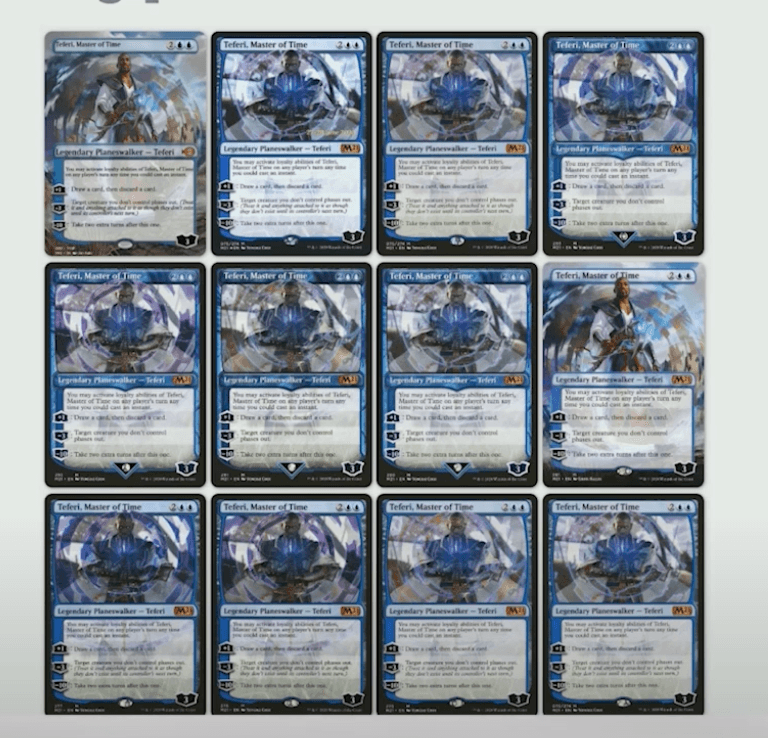
There are thousands of types of Magic: The Gathering cards with different attributes (characters, abilities, colors, etc.). The cards are randomly packaged, as the game is also collectible. The client trades cards — buying them from people who already own them and selling them to those seeking specific ones. For this to work, cards must be manually sorted and cataloged. Each year, this involves millions of cards, requiring a team of about 10 full-time employees. When fulfilling an order, it is necessary to check card availability in stock, locate them, and prepare them for shipping.
Automation of Sorting Collectible Cards
- Client typeSME
- IndustryCreative, Gaming & Entertainment
- Application areasOperations & Process Automation, Supply Chain & Logistics
- AI technologiesComputer vision and video analysis, Machine Learning
- Business impactsCustomer Product & Service Innovation, Operational Efficiency & Cost Savings
- Data typesImage Data
- Delivery modelsProduct / Licensed Software
- DeploymentsCloud
- Key capabilitiesAutonomous Control & Robotics, Recognition, Classification & Tracking
- Project stagesProof of Concept (prototype / PoC / pilot)
- Solution formsAPI / Micro-service Interface, Integrated Edge / On-device Solution
Solution Description
Problem description
Solution
We designed a card-sorting machine and developed an algorithm that converts a scanned image of a card into a hash and compares it with hashes in an open-source database. At the same time, it stores the history of individual runs with recognized cards and their metadata on the backend. On the frontend, the client has an overview of runs with basic statistics (number of cards, time, accuracy), a list of recognized cards, and a list of those not recognized with sufficient certainty and awaiting manual verification — the system suggests possible matches in an “autocomplete” style.
Main Users of the Solution
Buyers
Technologies used
Google Cloud IoT Core, Redis Enterprise Cloud on Google Cloud (with PostgreSQL), Google Cloud Storage, BigQuery, Google Cloud Functions, Google Compute Engine, Cloud Run Admin API, Docker image creation, Raspberry Pi
Implementation
Project Owner on the Client's Side
Head of business unit
Participation on the Client's Side
- Business / Product Owner
- End users
Form of Supplier Involvement
Full implementation
Impact and Results
Qualitative Benefits
Reduction of repetitive work
Client Feedback
Revolt BI oversaw the development of both hardware and software for the automatic recognition and sorting of collectible cards. The image recognition algorithm in Python used machine learning models trained in TensorFlow. The backend architecture was designed and operated on Google Cloud Platform.
Lessons Learned and Recommendations
Key Success Factors
The greatest contributor to the project’s success was the close collaboration between the technical and business teams, which enabled quick responses to client needs and iterative fine-tuning of the solution.
Recommendation for Others
We recommend others to begin with a thorough understanding of the domain and user needs — in our case, it helped that the team understood how the collectible card market works. We also recommend building the solution modularly and scalably, leveraging cloud services that allow for easy automation and process adjustments. Close cooperation between technical and business teams is crucial — regular communication prevented misunderstandings and accelerated development.
Promotion
Demo / Public Resources

- CompanyRevolt BI
- ContactBarbora Kalačová
- Emailmarketing@revolt.bi
- Websitehttps://www.revolt.bi
- AddressVoctářova 2449, 180 00 Praha