The client needed to establish a systematic framework for AI implementation, as the lack of a unified approach risked random use case selection, inefficient investments, duplicate initiatives, and increased regulatory, security, and organizational risks. Additionally, there was no clear procedure for linking technological AI capabilities with the real needs of individual departments or for prioritizing further development. It was therefore essential to create a strategic foundation for the safe, economically sound, and long-term sustainable use of AI.
Creation of a tailored AI strategy
Client NameÚzemní samosprávy
Client CountryCzech Republic
- Client typePublic sector
- IndustryGovernment & Public Services
- Application areasStrategy, Planning & Decision-Making
- AI technologiesNo direct implementation of AI technology
- Business impactsCustomer Product & Service Innovation, Operational Efficiency & Cost Savings
- Data typesDocuments / Semi-structured Data
- Delivery modelsConsulting
- DeploymentsNo Deployment
- Key capabilitiesPlanning, Scheduling & Optimization, Predictive Analytics & Forecasting
- Project stagesAnalysis / Solution Design
- Solution formsAnalysis, Recommendation, or Report, Educational Program
Solution Description
Problem description
Solution
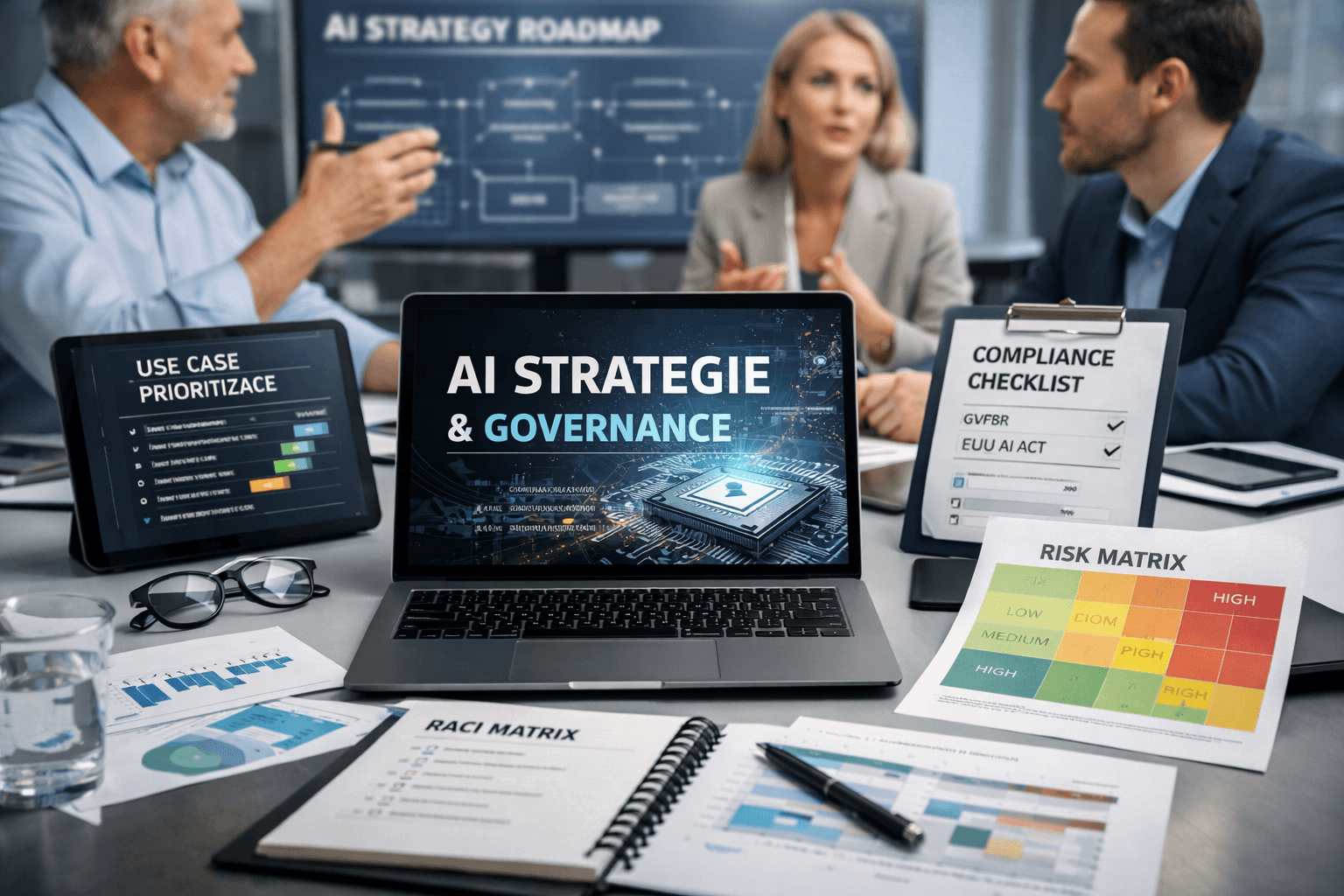
Consultation was provided focused on AI strategy, AI governance, and use case prioritization. This included structured workshops, analysis of organizational processes and needs, identification of opportunities for AI utilization, their evaluation based on benefit, feasibility, and risks, and the design of a prioritized backlog and roadmap. Additionally, an AI governance framework was prepared, including recommendations for roles, rules, AI initiative approval, risk management, and compliance with regulatory requirements. The result was a practical foundation for the managed adoption of AI within the organization.
Main Users of the Solution
Organization management, department heads, process owners, IT, digitalization or innovation team, legal and compliance roles, or other AI initiative guarantors.
Project timeframe (months)
Several weeks (depending on the number of workshops).
Technologies used
Facilitated workshops, process mapping, AI readiness assessment, prioritization matrix of use cases, backlog and roadmap of AI initiatives, AI governance framework, design of roles and responsibilities, risk management model, compliance checklists for GDPR and EU AI Act, documentation and approval templates.
Additional services
- AI strategy and roadmap
- Audit / feasibility study
- Identification and prioritisation of suitable use cases
- Data governance and data quality
Implementation
Project Owner on the Client's Side
Top management (C‑level)
Participation on the Client's Side
- Business / Product Owner
- Domain/ Process Experts
- Software & Data Engineering / IT Ops
- Project and Change Management
- Quality, Security, Compliance
- End-users
Form of Supplier Involvement
Technical support / consultation only
Operation and Maintenance
Operational Model
Subsequent possibility of running prioritized POCs and their productization.
Needed Competencies on the Client's Side
Ability to make decisions.
Other Resources or Infrastructure
Participation of suitable persons in workshops and provision of inputs.
Impact and Results
Qualitative Benefits
The solution has brought the organization a more systematic approach to implementing AI, better coordination between management, IT, process owners, and compliance roles, and greater transparency in decision-making regarding AI initiatives. Thanks to the prioritization of use cases, areas with the highest potential have become clearer.
Quantitative Results
Within this type of consulting project, the main measurable outputs include: the number of analyzed agendas and processes, the number of identified and evaluated AI use cases, the number of proposed priority pilots, the scope of the created roadmap, and the number of defined governance artifacts. In similar reference projects, for example, 8 workshops were held, 150 use cases were identified, and 4 PoCs were converted into production projects.
Client Feedback
The client particularly appreciated the ability to connect the strategic level of AI with the practical needs of the organization, clearly structure priority use cases, and simultaneously set up a realistic governance framework for the safe implementation of AI.
Lessons Learned and Recommendations
Key Success Factors
Strong involvement of leadership and key stakeholders, high-quality facilitated workshops.
Biggest Challenges
Varying levels of digitalization and data organization, different quality of process documentation. Aligning expectations of various departments, translating general AI ambitions into specific priorities, and the need to consider regulatory and security requirements.
Recommendation for Others
Start with business goals and processes, not technology. First, verify data readiness, involve business, IT, and compliance, and prioritize use cases based on benefit, feasibility, risks, and regulatory impact. Set up governance from the beginning, not just after the first pilots.
Promotion
Demo / Public Resources
- Interní strategie bohužel nemají veřejné výstupy.
- CompanyMAMA TELMA AI
- ContactKuba Krchák
- Emailsales@telma.ai
- Websitehttps://telma.ai
- AddressRevoluční 17, 110 00 Praha