Newton Media processes over two million articles each month in six languages. To turn these articles into high-quality data, they must be tagged — and in the media intelligence field, accurate and detailed tagging is essential. However, manual tagging is time-consuming, expensive, prone to human error, and insufficiently granular when it comes to identifying specific entities (people, organizations, locations, etc.). To provide its clients with faster, more detailed, and higher-quality monitoring, Newton Media needed to automate the process.
Detailed AI-powered media monitoring
Client NameNewton Media
Client CountryCzech Republic
- Client typeSME
- IndustryMarketing & Media
- Application areasProduct Development, Innovation, R&D
- AI technologiesAdvanced Analytics / Data Science, Machine Learning, Natural Language Processing (NLP)
- Business impactsCustomer Experience & Market Growth, Customer Product & Service Innovation
- Data typesDocuments / Semi-structured Data, Textual Data
- Delivery modelsService / Subscription
- DeploymentsCloud
- Key capabilitiesIntelligent Search & Knowledge Retrieval, Recognition, Classification & Tracking
- Project stagesScaling / Expanded Implementation
- Solution formsPlugin / Extension for an existing system
Solution Description
Problem description
Solution
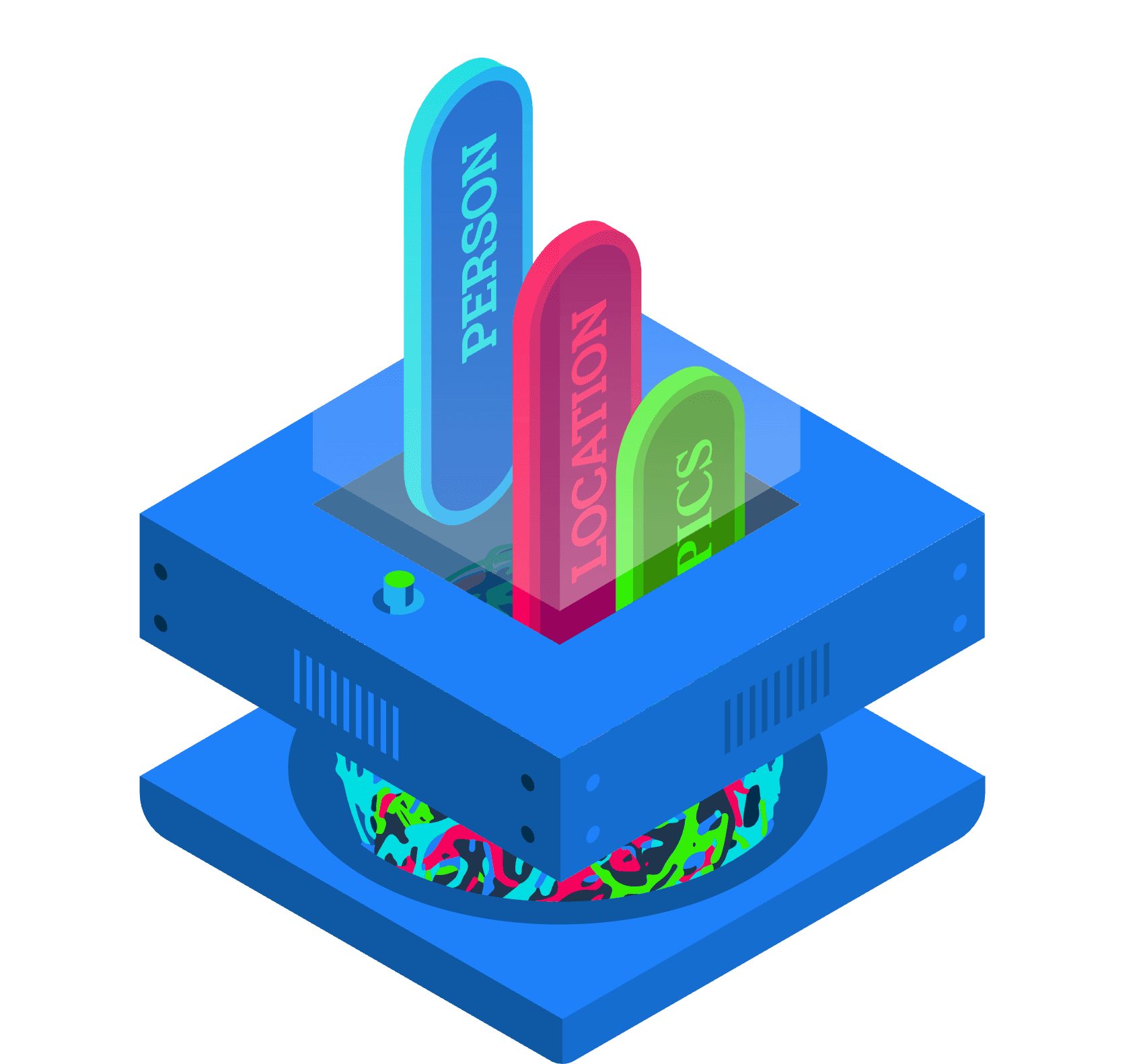
We implemented our NLP solution at Newton Media. First, it accurately recognizes entities, detecting people, places, organizations, and more in the texts. These entities were enriched with additional information — such as a CEO for an organization, a region for a city, or a role for a person — and linked together, allowing media interactions between entities to be tracked. The solution can also analyze context to determine sentiment and the relevance of each entity. To handle millions of articles, we ensured scalability for real-time data processing.
Main Users of the Solution
Data analysts, marketing specialists, PR specialists, media analysts, journalists
Project timeframe (months)
3
Additional services
- Annotation / synthetic data / dataset extension
- Continuous maintenance and retraining of the model
Implementation
Project Owner on the Client's Side
C-level executives
Participation on the Client's Side
- Data & ML specialists
- Software & Data Engineering / IT Ops
- Project and change management
Form of Supplier Involvement
Joint implementation with the client
Operation and Maintenance
Operational Model
Entity relevance and freshness are ensured by Geneea Analytics through the Geneea Knowledge Base.
Impact and Results
Qualitative Benefits
Thanks to the integration of Geneea’s NLP system, the analytical potential of Newton Media’s text data significantly expanded, greatly increasing Newton’s competitive advantage in media intelligence. The main benefit is a drastic improvement in the user experience for Newton Media’s clients, particularly through advanced text analysis capabilities and the quality and granularity of tagged entities.
Quantitative Results
Increased efficiency – time required for processing and classifying media outputs dropped by 67%
Improved accuracy – the precision of identifying relevant entities rose by 43% compared to previous methods
Lessons Learned and Recommendations
Key Success Factors
A crucial factor is the quality of the knowledge base in which entities are stored (Geneea Knowledge Base) and the long-term development and continuous improvement of the NLP solution tailored specifically for media.
Recommendation for Others
Tagging and automatic entity recognition is becoming increasingly important in the media and media intelligence industries (and beyond). If you work with content and aren’t using tagging yet, it’s high time you start — your competitors already are. Keeping data up to date and ensuring high tagging accuracy is a task most companies don’t have the capacity for. This is why the current trend is “buy, don’t build” — choosing a proven, balanced, ready-to-use solution rather than developing your own with uncertain results. When implementing an external solution, ensure it can recognize all entities appearing in your content (e.g., local football clubs) or that the vendor can add them for you. Another critical element is entity relevance — whether an entity is mentioned only in passing or is the main topic (e.g., an article about Instagram vs. a brief Instagram mention of a celebrity at the end of an article). The solution must detect this as well. And beware of those who claim that a large language model alone can handle this task. Sure, it can do something, but it will take forever, cost a fortune, and the results will still be worse than those of a specialized solution combining multiple NLP approaches.
Promotion
Demo / Public Resources
- https://demo.geneea.com/
- https://geneea.com/cs/case-studies/newton/
- https://www.newtonmedia.cz/entity-prinasi-rychlou-orientaci-v-medialnich-datech/
- https://www.idnes.cz/zpravy/mediahub/newton-media-entity-geneea-medialni-data.A211112_082650_mediahub_jpl
- https://www.mam.cz/novinky/2021-11/newton-media-zlepsil-orientaci-v-medialnich-datech/
- Companyict; marketing-media; creative-gaming
- ContactPetr Hamerník
- Emailpetr.hamernik@geneea.com
- Websitehttps://geneea.com
- AddressOstrovní 2064/5, 110 00 Praha